Book Appointment Now

Top Behavioral Questions Employers Ask in Job Interviews


Behavioral questions are one of the most common parts of modern job interviews. Employers use them to understand how you handled real situations at work and how you may perform in the future.
If you have ever heard questions like “Tell me about a time you solved a difficult problem” or “Describe a situation where you worked with a difficult teammate,” you have already encountered behavioral interview questions.
Preparing for these questions can make a big difference in how confident you feel during an interview. In this guide, you will learn what behavioural questions are, why employers ask them, and how to answer them effectively using proven strategies.
Read Also: Best Interview Questions Recruiters Ask in 2026
What Are Behavioral Questions?
Behavioral questions are interview questions that ask candidates to describe how they handled real situations in the past. Employers use behavioral interview questions to understand how you think, how you solve problems, and how you behave in workplace situations.
Instead of asking what you would do in a situation, interviewers ask what you actually did. This helps employers see how you respond to challenges, work with teams, and make decisions at work.
For example, common behavioral interview questions include:
- Tell me about a time you solved a difficult problem.
- Describe a situation where you worked with a challenging coworker.
- Give an example of when you had to meet a tight deadline.
- Tell me about a time you showed leadership at work.
These questions help employers evaluate important professional skills such as teamwork, communication, leadership, and problem-solving.
Behavioral interview questions are used across many industries, including marketing, technology, finance, customer service, and management roles. Recruiters rely on them because past behaviour often shows how someone will perform in the future.
Most candidates answer behavioral questions using the STAR method. STAR stands for situation, task, action, and result. This method helps candidates explain their experience in a clear and structured way.
Behavioral questions may focus on areas such as:
Teamwork
Employers want to understand how you collaborate with coworkers and contribute to team success.
Problem solving
Companies look for employees who can identify problems and find practical solutions.
Leadership
Interviewers often ask about moments when you guided others or took initiative.
Conflict resolution
Many behavioural questions explore how you handled disagreements or difficult situations at work.
Communication
Employers want examples that show how clearly you share ideas and work with others.
Understanding behavioral questions is the first step to preparing strong interview answers. When you know what employers are looking for, you can organize your past experiences in a way that clearly shows your skills and value.
Why Employers Ask Behavioral Interview Questions

Employers ask behavioral interview questions to understand how candidates behave in real work situations. These questions help hiring managers evaluate how you solve problems, work with others, and respond under pressure.
Instead of relying only on resumes or technical skills, employers want proof of how you handled situations in the past. Behavioral questions allow recruiters to see examples of your decision-making, communication style, and ability to handle challenges.
Hiring managers believe that past behaviour often predicts future performance. If you handled a difficult project successfully before, there is a good chance you can handle a similar situation again.
Behavioral interview questions help employers evaluate several important workplace skills.
Problem solving
Companies want employees who can identify challenges and find solutions. Interviewers often ask candidates to describe a time they solved a problem or improved a process.
Teamwork
Many jobs require collaboration. Employers use behavioral questions to understand how well you work with coworkers and contribute to team success.
Leadership
Even for non-management roles, employers value leadership skills. Interviewers may ask about moments when you took initiative, guided a team, or helped others succeed.
Adaptability
Workplaces change quickly. Behavioral questions help employers see how you respond to unexpected problems, tight deadlines, or shifting priorities.
Communication
Strong communication is essential in almost every job. Employers ask behavioral questions to understand how clearly you explain ideas, handle feedback, and interact with colleagues.
Behavioral questions also help employers compare candidates more fairly. When every applicant answers the same type of questions, interviewers can evaluate responses based on real experiences instead of assumptions.
For example, an interviewer might ask:
Tell me about a time you handled a difficult client.
Describe a situation where you had to work under pressure.
Give an example of when you solved a conflict on your team.
These questions encourage candidates to explain a real story instead of giving a generic answer.
Many companies also use behavioral interview questions because they reveal how candidates think. The way someone approaches a challenge often shows their problem-solving process, emotional intelligence, and professionalism.
Knowing why employers ask behavioral questions can help you prepare stronger answers. When you know what interviewers are looking for, you can choose examples from your experience that clearly demonstrate your skills.
Most Common Behavioral Interview Questions
Most behavioral interview questions follow a similar pattern. Employers ask candidates to describe a real experience that shows how they handled a situation at work.
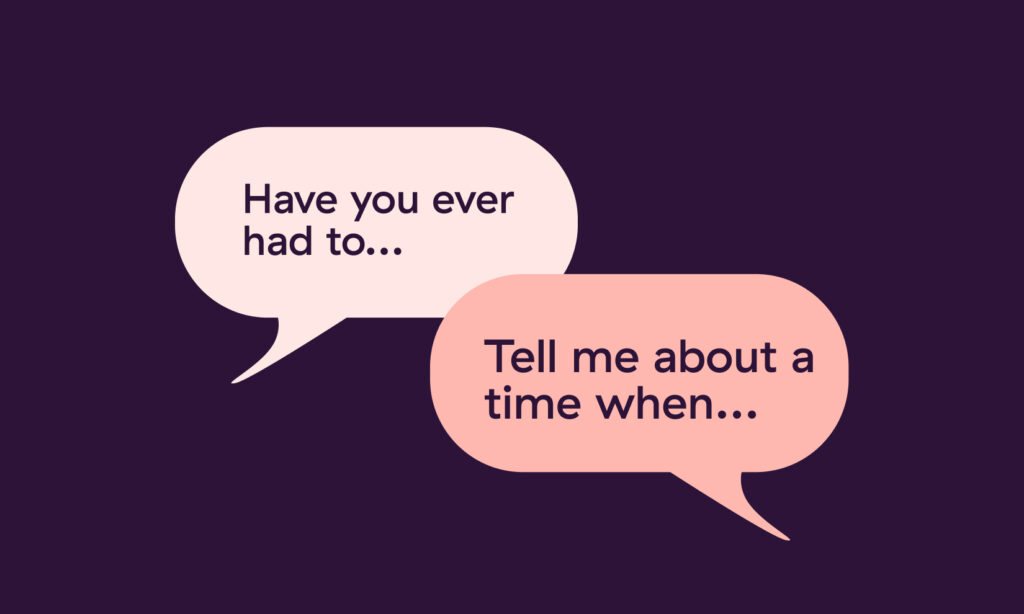
These questions often begin with phrases like “Tell me about a time…” or “Give an example of when…”. The goal is to learn how you behave in real workplace situations rather than hearing theoretical answers.
Here are some of the most common behavioral questions employers ask during interviews.
Tell me about a time you faced a difficult problem at work
This question helps employers understand your problem-solving skills. They want to see how you approach challenges and what steps you take to find a solution.
Describe a situation where you had to work with a difficult coworker
Teamwork is important in almost every job. Interviewers use this question to evaluate how you manage conflict and maintain professional relationships.
Give an example of a time you handled pressure or tight deadlines
Many roles require employees to work under pressure. Employers want to know how you stay organized and deliver results when time is limited.
Tell me about a mistake you made at work and what you learned from it
This question reveals how you handle responsibility and growth. Employers appreciate candidates who can reflect on mistakes and show improvement.
Describe a time when you showed leadership
Leadership does not only apply to managers. Interviewers often ask this question to see whether you can take initiative and guide others when needed.
Tell me about a time you had to adapt to change
Work environments change quickly. Employers want to know how flexible you are when processes, goals, or priorities shift.
Give an example of when you had to communicate a difficult message
Strong communication skills are essential in many roles. This question helps employers see how you handle sensitive conversations or feedback.
Describe a situation where you helped a team succeed
Companies value employees who contribute to team success. Interviewers want examples of how you collaborate and support coworkers.
These behavioural questions may look simple, but they allow employers to learn a lot about a candidate’s personality, work ethic, and decision-making process.
When preparing for interviews, it is helpful to think about real experiences from your past jobs, internships, projects, or academic work. Having several examples ready can help you answer behavioural questions confidently.
How to Answer Behavioral Questions Using the STAR Method
One of the most effective ways to answer behavioral questions is by using the STAR method. Many career experts recommend this method because it helps candidates explain their experiences clearly and stay focused during interviews.
STAR stands for situation, task, action, and result. This structure allows you to tell a short, organized story that shows how you handled a real situation.
Situation
Start by describing the context of the situation. Briefly explain where you were working or what the problem was. This gives the interviewer a clear understanding of the background.
Task
Next, explain your responsibility in that situation. What were you expected to do? What goal were you trying to achieve?
Action
This is the most important part of your answer. Describe the steps you personally took to address the situation. Focus on your decisions, your actions, and how you approached the problem.
Result
Finally, explain the outcome. What happened because of your actions? If possible, include measurable results such as improved performance, successful projects, or lessons learned.
Here is a simple example of a behavioural question answered using the STAR method.
Question: Tell me about a time you solved a problem at work.
Situation
At my previous job, our team noticed that customer complaints about delivery delays were increasing.
Task
I was responsible for reviewing the process and helping the team identify possible improvements.
Action
I analyzed our delivery data and discovered that most delays came from miscommunication between departments. I suggested creating a shared tracking system so both teams could monitor orders in real time.
Result
After implementing the system, delivery delays dropped by nearly 30 per cent within three months.
Using the STAR method helps you avoid vague answers. Instead of giving general statements, you provide a clear story that demonstrates your skills and results.
Many hiring managers prefer STAR-based answers because they are structured and easy to evaluate. When candidates explain their experiences this way, interviewers can quickly understand the situation, the candidate’s role, and the impact of their actions.
When preparing for behavioral interview questions, try to identify several past experiences that highlight your strengths. Think about examples that demonstrate leadership, teamwork, communication, and problem-solving.
Practising the STAR method before an interview can help you stay calm and confident when answering behavioral questions. It ensures your answers remain focused and relevant to the job you are applying for.
Behavioral Interview Questions and Sample Answers
Understanding behavioral questions becomes easier when you see real examples. Employers often ask similar behavioural interview questions across many industries because these questions reveal how candidates think, act, and solve problems.
Below are several common behavioural questions with simple sample answers using the STAR method.
Question 1: Tell me about a time you solved a difficult problem.
Situation
At my previous job, our marketing team noticed a sudden drop in website traffic.
Task
I was asked to investigate the issue and help identify the cause.
Action
I reviewed our analytics data and discovered that several key pages had lost search visibility due to technical errors. I worked with the web development team to fix the issues and update the pages.
Result
Within a few weeks, website traffic increased again and even exceeded the previous numbers.
Question 2: Describe a time you had to work with a difficult coworker.
Situation
During a team project, one coworker frequently missed deadlines, which slowed down the entire team.
Task
I needed to find a way to keep the project moving while maintaining a positive working relationship.
Action
I scheduled a short meeting with the coworker to understand the challenges they were facing. We agreed on clearer timelines and divided tasks more effectively.
Result
The project was completed successfully, and our communication improved for future projects.
Question 3: Tell me about a time you handled pressure at work.
Situation
Our team had to complete a large campaign launch with a very tight deadline.
Task
I was responsible for coordinating several parts of the campaign and ensuring everything stayed on schedule.
Action
I created a clear checklist, organized daily updates with the team, and focused on the highest priority tasks first.
Result
The campaign launched on time and received strong engagement from our target audience.
Question 4: Tell me about a mistake you made at work.
Situation
Early in my career, I sent a report to a client that contained outdated data.
Task
I needed to correct the mistake quickly and maintain the client’s trust.
Action
I immediately contacted the client, explained the error, and sent an updated report with the correct information.
Result
The client appreciated the transparency and continued working with our team.
These examples show that behavioral interview questions are not only about success. Employers also want to see how candidates learn, adapt, and grow from their experiences.
The most effective answers are clear, honest, and focused on real outcomes. When you explain what you did and what happened as a result, interviewers can better understand your value as a candidate.
How to Prepare for Behavioral Interview Questions
Preparing for behavioral interview questions becomes easier when you plan your examples ahead of time.
Start by identifying several experiences from your past work, school projects, internships, or volunteer activities. Focus on situations that demonstrate skills like teamwork, leadership, problem-solving, and communication.
Practice organizing your answers using the STAR method. This helps you explain your story clearly without giving unnecessary details.
You should also review the job description before the interview. Many behavioural questions are designed to evaluate the specific skills required for the role.
For example:
If the job requires teamwork, expect questions about collaboration.
If the role requires leadership, expect questions about initiative and decision-making.
Practising your answers out loud can also help you feel more confident during the interview.
See Also: 2026 Questions to Get to Know Someone in Job Interviews
Conclusion
Behavioural questions are a key part of modern job interviews. Employers use them to understand how candidates respond to real workplace situations and how they may perform in the future.
By understanding why these questions are asked and preparing structured answers using the STAR method, you can present your experience clearly and confidently.
The best preparation involves reflecting on your past experiences and choosing examples that demonstrate your strengths. When you combine preparation with clear storytelling, behavioural interview questions become an opportunity to show employers the value you bring to a role.