Book Appointment Now

The 7 Types of Resumes: How to Choose the Right One in 2026
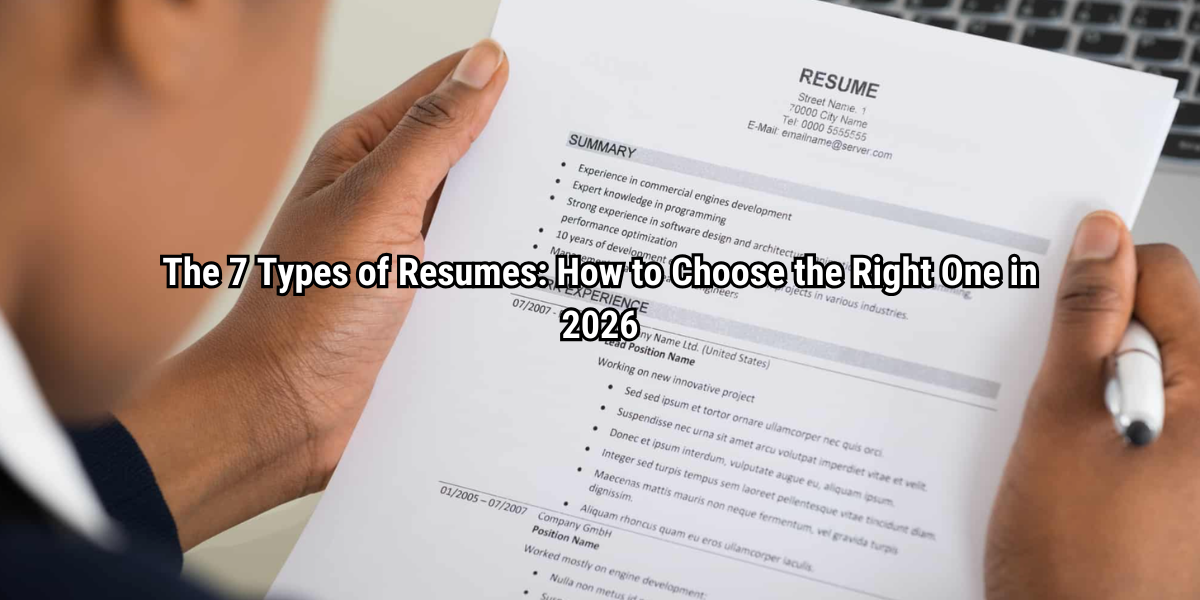
Choosing the right resume can make the difference between getting noticed and being overlooked. There are multiple types of resumes, each designed to highlight your work history, skills, and achievements in a way that fits your career stage and job goals.
The three primary types of resumes are the chronological resume, which emphasizes your career progression; the functional resume, which focuses on transferable skills; and the combination resume, which blends both approaches.
Beyond these, specialized formats like targeted resumes, infographic resumes, and video or digital portfolio resumes serve niche purposes. Understanding the differences helps you select the right format, tailor your application, and improve your chances of landing an interview.
Key Takeaways:
- Choose a chronological or reverse-chronological format resume if you want to showcase steady career growth.
- Use a functional resume to highlight skills for career changers or those with employment gaps.
- Pick a combination or hybrid resume format to display both skills and work history.
- Specialized resumes (targeted, infographic, video) work best for creative or highly tailored applications.
Chronological Resume: Reverse-Chronological Format for Career Growth
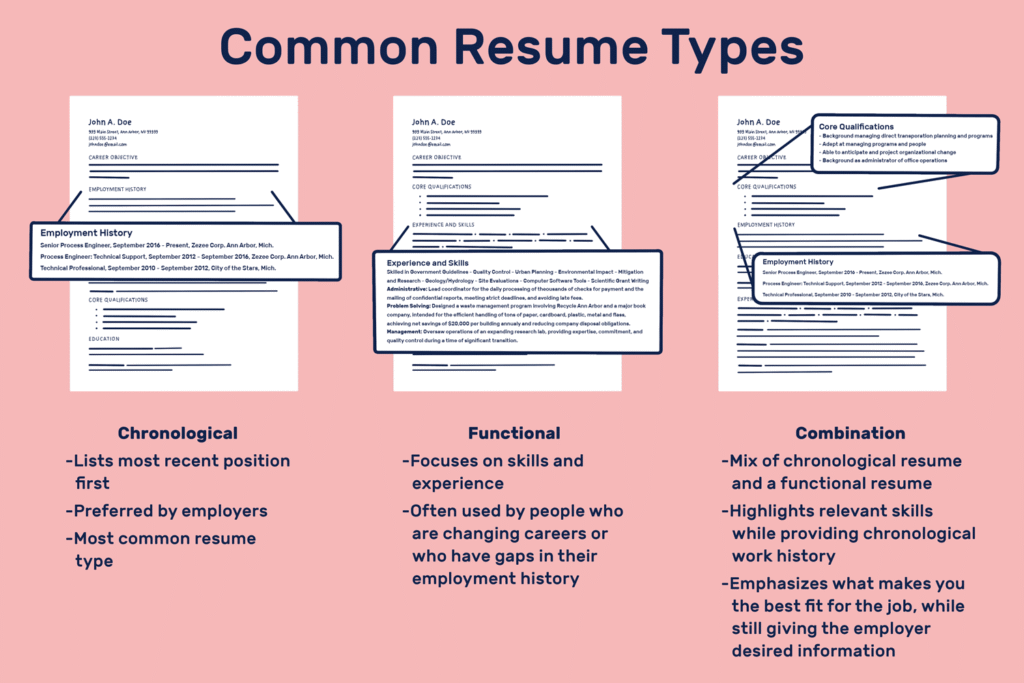
A chronological resume, also called a reverse-chronological format resume, lists your work history starting with the most recent position and moves backward. This format emphasizes your career progression and highlights steady employment, making it the industry standard and the preferred choice for hiring managers and Applicant Tracking Systems (ATS).
RELATED: How Long Should a Resume Be? 2026 Update
Who Should Use It:
- Professionals with a consistent work history in the same industry.
- Job seekers looking to demonstrate career growth or promotions.
- Candidates aiming to make their resume ATS-friendly.
Why It Works:
- Employers can quickly scan your career trajectory.
- It showcases your most relevant and recent experience first.
- ATS software easily parses this format, improving visibility in online applications.
Key Sections of a Chronological Resume:
- Professional Summary – 2–3 sentences summarizing your experience and skills.
- Work Experience – List jobs in reverse chronological order, including job title, company, location, and dates. Include bullet points highlighting achievements.
- Education – Degrees, certifications, and relevant coursework.
- Skills – Core competencies, certifications, or technical skills.
Example (Mini Reverse-Chronological Resume Template):
| Job Title | Company | Dates | Key Achievements |
| Marketing Manager | XYZ Corp | 2022–Present | Increased social media engagement by 40% |
| Content Specialist | ABC Inc | 2020–2022 | Launched a blog series generating 50k visits/month |
| Marketing Intern | LMN Ltd | 2019–2020 | Assisted in creating marketing campaigns |
Tips:
- Include dates of employment to satisfy ATS requirements.
- Use action verbs in bullet points to keep the content active and impactful.
- If you have gaps in employment, address them briefly in your summary rather than omitting roles.
Functional Resume: Highlight Your Skills Over Work History
A functional resume focuses on your abilities, qualifications, and accomplishments rather than your chronological work history. This format emphasizes what you can do, making it ideal for career changers, recent graduates, or individuals with gaps in employment.
Who Should Use It:
- Professionals switching industries or job roles.
- Candidates with employment gaps who want to highlight skills instead.
- Recent graduates or individuals whose work experience doesn’t directly align with their target role.
Why It Works:
- Draws attention to types of skills for resume instead of past positions.
- Allows you to showcase achievements and competencies upfront.
- Offers a clean structure for recruiters focused on capabilities rather than timelines.
Key Sections of a Functional Resume:
- Professional Summary – A brief 2–3 sentence overview highlighting your strengths.
- Skills Section – Organize your top skills in categories (technical, soft skills, industry-specific). Include bullet points showing real-world examples of each skill.
- Work Experience – List employers briefly without detailed dates, focusing on role relevance.
- Education & Certifications – Include degrees and relevant courses.
Example: Skills-Focused Functional Resume Snippet:
| Skill Category | Examples of Achievements |
| Project Management | Led a 6-month project delivering software ahead of schedule |
| Communication | Presented weekly reports to cross-functional teams |
| Marketing | Developed social media campaigns increasing engagement by 25% |
| Technical | Proficient in Excel, SQL, and Tableau for data analysis |
READ MORE: Skills for Resume: The Importance of Skills on Your Resume in 2026
Combination Resume: Blend Skills and Career History
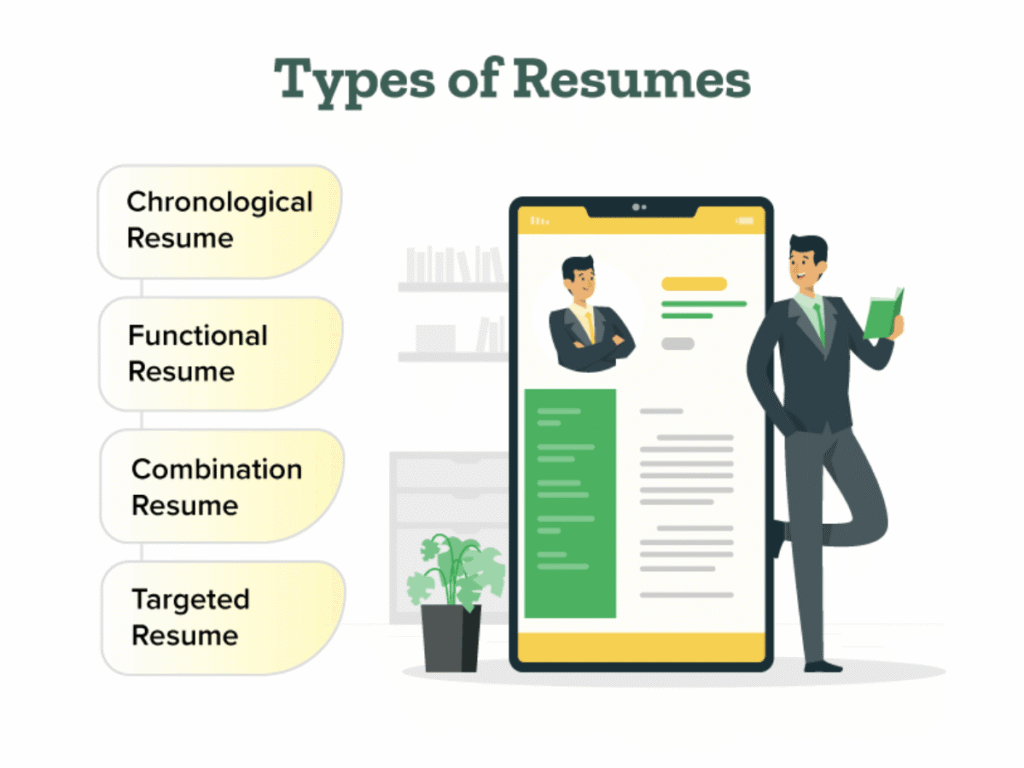
A combination resume, also known as a hybrid resume format, merges the strengths of functional resumes and chronological resumes. It highlights your key skills while providing a reverse-chronological work history, offering the “best of both worlds” for employers and recruiters.
Who Should Use It:
- Professionals with diverse or non-linear backgrounds.
- Job seekers making a slight career pivot or transitioning industries.
- Candidates who want to showcase both achievements and a career timeline.
Why It Works:
- Balances skill emphasis with clear work history.
- Helps recruiters quickly understand both capabilities and experience.
- Ideal for roles that require both technical expertise and proven experience.
Key Sections of a Combination Resume:
- Professional Summary – Brief 2–3 sentence statement of skills and experience.
- Skills Section – Highlight 4–6 key skills with examples of how you applied them.
- Work Experience – List jobs in reverse-chronological order with achievements and responsibilities.
- Education & Certifications – Include degrees, licenses, and relevant courses.
Example: Combination / Hybrid Resume Snippet:
| Skill | Achievement | Relevant Role |
| Project Management | Led a 10-member team to deliver project 2 weeks early | Project Manager, ABC Corp |
| Data Analysis | Built dashboards that reduced reporting time by 30% | Business Analyst, XYZ Inc |
| Marketing | Increased campaign engagement by 40% | Marketing Specialist, LMN Ltd |
Other Resume Types: Targeted, Infographic, Video, and Mini Resumes
Beyond the three main resume formats, several specialized resumes help candidates stand out in specific situations. These resume kinds allow you to highlight unique skills, creativity, or highly tailored experiences.
1. Targeted Resume
A targeted resume is customized for a specific job posting, emphasizing only the skills and experience most relevant to the role.
Who Should Use It:
- Professionals applying to multiple positions with different requirements.
- Candidates aiming to highlight career-relevant achievements for a single employer.
Why It Works:
- Shows employers you understand their needs.
- Improves ATS compatibility by including targeted keywords from the job description.
Tips:
- Rewrite your professional summary for each application.
- Include only relevant work experience and skills.
Keyword Integration: types of resumes and when to use them, targeted resume.
2. Infographic / Creative Resume
An infographic resume uses visual design elements to showcase your achievements, skills, and career path.
Who Should Use It:
- Designers, marketers, and creative professionals.
- Job seekers who want to stand out visually while still communicating key achievements.
Why It Works:
- Highlights creativity and design sense.
- Easily scannable for humans while keeping important details prominent.
Tips:
- Use colors and graphics sparingly for ATS compatibility.
- Include core information like skills, work history, and education in clear sections.
Keyword Integration: infographic resume, resume types, different types of resumes.
3. Video / Digital Portfolio Resume
A video resume presents your experience and skills in a short video format. A digital portfolio resume can include project samples or online links.
Who Should Use It:
- Creative, tech, or remote roles where demonstrating skills visually is valuable.
Why It Works:
- Engages employers directly and shows personality, communication, and presentation skills.
- Can differentiate candidates in highly competitive fields.
Tips:
- Keep videos 1–3 minutes max.
- Include captions or text highlights for clarity and ATS-like readability.
Keyword Integration: resume types CV, resume kinds.
4. Mini Resume / Condensed Resume
A mini resume condenses your experience into a 1-page summary or even a business-card style format.
Who Should Use It:
- Networking events, job fairs, or informational interviews.
- Quick reference for hiring managers.
Why It Works:
- Highlights key achievements at a glance.
- Encourages follow-up and discussion.
Tips:
- Include job title, key skills, and 2–3 achievements.
- Keep formatting simple and readable.
Keyword Integration: types of resumes, resume types, different types of resumes.
Summary Table: Other Resume Types at a Glance
| Resume Type | Best For | Key Feature |
| Targeted Resume | Specific job posting | Highly customized for a single role |
| Infographic Resume | Creative fields | Visual presentation of skills & achievements |
| Video / Digital Portfolio | Remote/Creative | Showcases personality and work samples |
| Mini Resume | Networking / Quick reference | Condensed, easy-to-read summary |
SEE ALSO: Highest-Paying Jobs Without a Degree: Top Careers That Pay $100k+
How to Choose the Right Resume Type for Your Career Goals
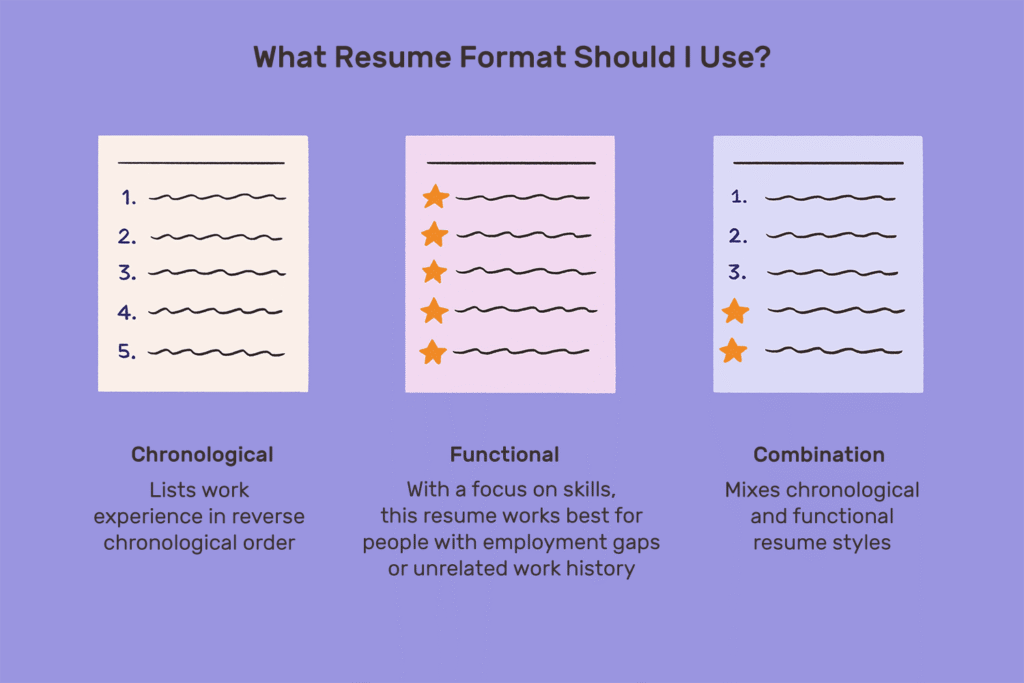
Selecting the right resume type ensures your application highlights your strengths and aligns with the role you want. Use this step-by-step framework to decide which format works best for you.
Step 1: Assess Your Work History
- Steady career growth, minimal gaps: Choose a chronological or reverse-chronological resume format.
- Gaps or non-linear experience: Consider a functional resume to emphasize skills over work history.
Step 2: Evaluate Your Skills and Achievements
- Strong transferable skills or recent training: A functional resume lets you showcase what you can do.
- Balanced skills + proven track record: A combination / hybrid resume format highlights both your abilities and employment history.
Step 3: Consider Your Career Stage and Industry
- Creative or design-focused roles: Use an infographic or video resume.
- Networking events or quick references: A mini resume provides a condensed, impactful overview.
- Targeted applications: Use a targeted resume to customize your application for a specific job.
Quick Decision Table
| Career Situation | Recommended Resume Type | Why It Works |
| Steady work history | Chronological / Reverse-Chronological | Highlights promotions and career growth |
| Career change / gaps | Functional | Emphasizes skills and achievements |
| Mixed skills + history | Combination / Hybrid | Shows both abilities and work timeline |
| Creative / visual role | Infographic / Video | Showcases creativity and personality |
| Job fairs / networking | Mini | Quick, scannable summary |
| Highly tailored job | Targeted | Matches employer’s specific requirements |
MORE: Best Guide to Team Building Activities for Work (2026)
Resume Writing Tips: Make Every Resume Count
Even with the perfect resume type, effective writing ensures your resume stands out to both recruiters and Applicant Tracking Systems (ATS). Follow these practical tips to create resumes that get noticed.
1. Keep It Clear and Concise
- Use short sentences and active verbs to describe achievements.
- Limit each job role to 3–5 bullet points.
- Avoid filler phrases like “responsible for” or “involved in.”
2. Highlight Relevant Skills
- Tailor your resume to the job description.
- Include types of skills for resume, emphasizing both technical and soft skills.
- For functional or combination resumes, place skills at the top to catch attention.
3. Optimize for ATS
- Include relevant keywords naturally from the job posting.
- Use standard headings like Work Experience, Education, and Skills.
- Avoid heavy graphics, unusual fonts, or excessive colors unless creating a creative/infographic resume.
4. Proofread Carefully
- Check for spelling, grammar, and formatting errors.
- Ensure consistency in dates, titles, and company names.
- A clean, error-free resume signals attention to detail and professionalism.
5. Use Action-Oriented Bullet Points
- Begin each bullet with an action verb.
- Quantify achievements where possible. Example: “Increased sales by 25% in six months.”
- Keep bullets concise, focused, and measurable.
6. Match Resume Type to Purpose
- Revisit types of resumes and when to use them to ensure format aligns with your career goals.
- Use targeted resumes for specific roles, functional resumes for skill emphasis, and combination resumes for a balanced approach.
Conclusion
Choosing the right resume type can boost your chances of landing interviews and clearly communicate your skills and achievements. By understanding the types of resumes, chronological, functional, combination, and niche formats like targeted or infographic resumes, you can tailor your application to match your career stage, industry, and specific job requirements.
Remember:
- Use reverse-chronological format resumes to highlight career growth.
- Use a functional resume to showcase transferable skills.
- Use a combination / hybrid resume format to balance skills and work history.
- Niche formats like targeted, infographic, video, or mini resumes help you stand out in creative or specialized fields.
Applying these strategies ensures your resume is clear, actionable, and attractive to both human recruiters and AI-driven selection tools.
Land More Interviews, Faster
Turn your resume and LinkedIn profile into a magnet for recruiters and ATS systems. Highlight the skills, experience, and achievements that truly get noticed.
Claim your free Resume & LinkedIn Strategy Session now and start getting results.
FAQ
What are the five types of resumes?
In addition to the main three types (chronological, functional, and combination), two other commonly recognized resume types are targeted resumes and infographic resumes.
Chronological, Functional, Combination, Targeted, Infographic. These formats cover most career situations, from standard applications to creative or highly tailored roles.
What are the 7 sections of a resume?
A standard resume often includes these seven sections:
Header – Name and contact information
Professional Summary – 2–3 sentence career overview
Skills – Key competencies and abilities
Work Experience – Job history in reverse chronological order
Education – Degrees, certifications, and relevant coursework
Achievements / Awards – Notable accomplishments
Additional Sections – Volunteer work, portfolio links, or languages
These sections help recruiters and ATS systems quickly assess your qualifications.
Which is the most common type of resume?
The chronological (or reverse-chronological) resume is the most common. It emphasizes career progression, lists jobs from most recent to oldest, and is preferred by both hiring managers and ATS systems.
Is a CV a type of resume?
Yes. A CV (Curriculum Vitae) is a type of resume, but it is usually longer and more detailed, often used in academia, research, or international applications. Resumes are typically shorter (1–2 pages) and targeted for corporate or general job applications.