Book Appointment Now

How Long Should a Resume Be? 2026 Update
A resume should typically be one to two pages long, depending on your level of experience and the role you are targeting. In most cases, employers prefer a 1-page resume for entry-level roles and a 2-page resume for mid-level professionals, while senior candidates may extend to three pages when their experience justifies it.
If you’re asking how long should a resume be, the real answer is simple: keep it as short as possible while still clearly showing your most relevant experience and impact. A well-structured resume should never add unnecessary length, it should remove anything that doesn’t help you get hired.
For most job seekers, especially those applying for standard roles, should a resume be one page? In many cases, yes. But once you gain more experience, expanding to two pages becomes not only acceptable but often more effective, because it allows you to highlight achievements, skills, and measurable impact without overcrowding the document.
RELATED: Skills for Resume: The Importance of Skills on Your Resume in 2026
Resume Length at a Glance (By Experience Level)
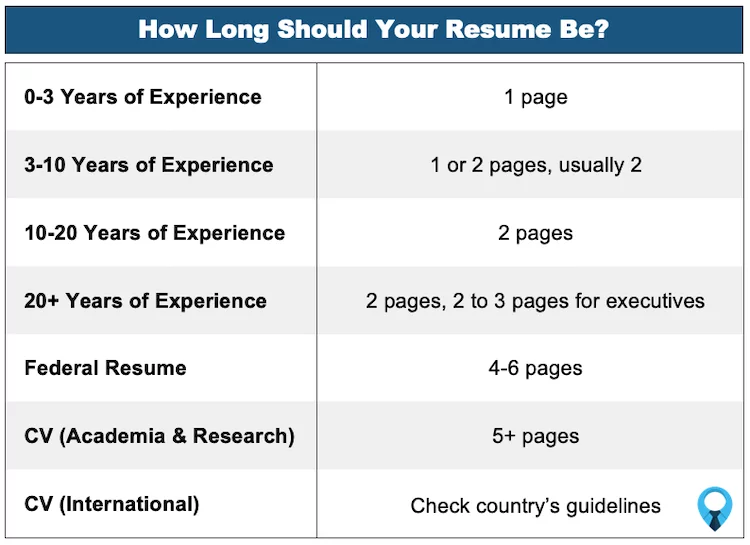
The fastest way to understand how long should a resume be is to match it to your career stage. Recruiters don’t judge resumes by page count alone; they scan for clarity, relevance, and proof of impact. Use the breakdown below to choose the right length and avoid under- or over-selling your experience.
Entry-Level (0–3 years) → 1 Page
- Focus: education, internships, skills, and early projects
- Keep everything tight and relevant to the job description
- Ideal answer to should resumes be one page: yes, in most entry cases
3 Years Experience → 1 Page (or slightly extended 1 page)
- Highlight measurable achievements, not responsibilities
- Prioritize recent roles and relevant skills
- Remove older or unrelated experiences
7 Years Experience → 1–2 Pages
- Expand to show career progression and impact
- Include stronger project results and quantifiable outcomes
- Balance detail with readability
10 Years Experience → 2 Pages
- Standard for mid-level professionals
- Focus on leadership, ownership, and results
- Avoid listing outdated or repetitive early roles
20 Years Experience → 2–3 Pages
- Senior professionals need space for leadership scope and major achievements
- Include strategic contributions, not every past role
- Prioritize relevance over chronology
Government Jobs → 1–3 Pages
- Requirements vary by role and country
- Often demand detailed work history and structured formatting
- Always follow job posting instructions first
Internship Applications → 1 Page
- Keep it simple and skills-focused
- Highlight coursework, projects, and transferable skills
- Avoid unnecessary work history
Master’s Applications → 1–2 Pages
- Emphasize academic achievements and research experience
- Include relevant projects, publications, or certifications
- Keep structure clean and academic-focused
Front and Back Resume Format → Not Recommended
- Modern hiring systems prefer digital clarity over physical formatting
- Page count matters more than layout style
- Keep structure clean and ATS-friendly
READ MORE: Good Reasons for Leaving a Job (With Sample Answers)
What Actually Determines Resume Length
Resume length is not random, and it is not strictly tied to rules like “always one page” or “always two pages.” Instead, recruiters and applicant tracking systems judge your resume based on clarity, relevance, and impact density.
If you understand what actually controls resume length, you stop guessing and start building a document that naturally fits the right number of pages.
Experience level determines structure first, not page count
Your career stage decides how much information you must present. Entry-level candidates compress their experience into skills, education, and small projects, while senior professionals need space to show leadership, outcomes, and scope.
In other words, more experience creates more relevant content—not filler.
Relevance always overrides completeness
A strong resume removes anything that does not support the job you want.
This means:
- Old or unrelated roles get shortened or removed
- Repeated responsibilities get consolidated
- Only job-relevant achievements stay visible
This is the key reason two people with the same experience can have completely different resume lengths.
Content quality matters more than page count
Hiring managers do not reward longer resumes. They reward stronger signals.
A shorter resume can outperform a longer one if it contains:
- measurable results
- clear impact statements
- role-specific keywords
- strong alignment with the job description
This is why asking how many pages should a resume be in a resume is less important than asking whether every line adds value.
How far back your resume goes directly affects length
Most resumes should go back 10 to 15 years. Anything beyond that often becomes noise unless it adds strong relevance.
Older experience should be reduced or removed because:
- it dilutes modern skills
- it increases page count unnecessarily
- it reduces readability for recruiters
This is the core answer to how far back should a resume go and how far should a resume go back.
Industry expectations also influence structure
Some industries naturally require longer resumes:
- Government roles often require detailed history
- Academic applications may extend beyond 2 pages
- Technical or leadership roles may require deeper breakdowns
This is why there is no universal answer to how many pages should a resume be, context always matters.
Final rule of resume length decision-making
If you want a simple decision rule:
- If a detail does not help you get shortlisted → remove it
- If it strengthens your case for the role → keep it
- If it repeats information → merge it
This is how professionals naturally arrive at the correct resume length without forcing page limits.
SEE ALSO: Highest-Paying Jobs Without a Degree: Top Careers That Pay $100k+
Should a Resume Be One Page?
The idea that every resume must be one page is outdated, but it still applies in many cases. The real rule is simple: your resume should be as short as possible while still proving you are qualified for the role.
For many job seekers, especially early in their careers, a one-page resume is not just enough—it is ideal. It forces clarity, prioritization, and strong storytelling through impact rather than volume.
When a one-page resume works best
A one-page resume is the strongest format when you have limited but relevant experience. It works best if you:
- Have 0–5 years of experience
- Are applying for internships or entry-level roles
- Are switching careers and focusing on transferable skills
- Have a focused career path without extensive job history
In these cases, a single page improves readability and helps recruiters quickly identify fit.
This directly answers common queries like should a resume be one page, should resumes be one page, and do resumes need to be one page.
When a one-page resume becomes a limitation
A one-page resume starts to work against you when you have more experience than space allows.
If you try to compress too much information, you risk:
- Removing key achievements
- Oversimplifying your impact
- Making your experience look weaker than it actually is
This is especially true for professionals asking should my resume be one page or does a resume have to be one page, the answer depends on whether compression reduces clarity.
When two pages become the better choice
A two-page resume becomes more effective when your experience grows beyond entry level.
It allows you to:
- Show measurable achievements across multiple roles
- Include relevant leadership or project experience
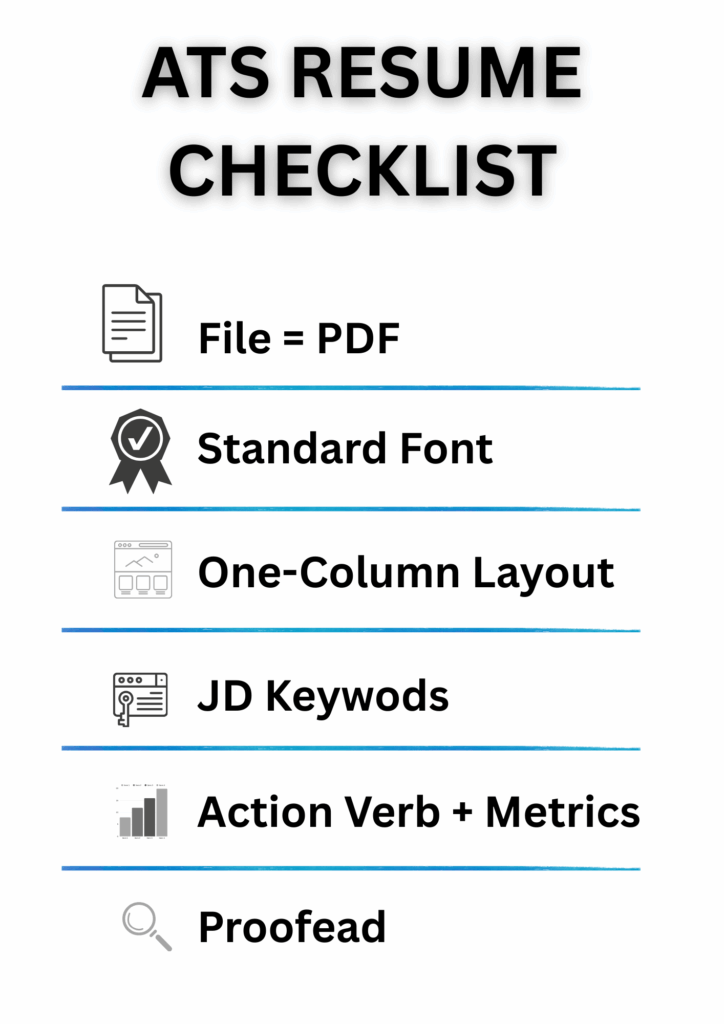
- Add industry-specific keywords for ATS systems
- Maintain readability without overcrowding
This is why most mid-level professionals naturally move away from strict one-page formatting.
It also explains why how many pages should a resume be often resolves to 1–2 pages in modern hiring.
When more than one page is acceptable
A resume can extend beyond two pages when the role demands depth and scope.
This applies to:
- Senior leadership positions
- Government applications
- Academic or research-based roles
In these cases, completeness matters more than compression, especially when documenting impact across long careers.
The real rule hiring managers follow
Recruiters do not measure success by page count. They measure:
- Can I understand this candidate in under 10 seconds?
- Does this resume show clear value?
- Is the most important information easy to find?
If a one-page resume achieves this, it wins. If a two-page resume does it better, it wins instead.
That is the real answer to should a resume be 1 page, it depends on clarity, not tradition.
MORE: Best Guide to Team Building Activities for Work (2026)
When a Two-Page (or Longer) Resume Works Better
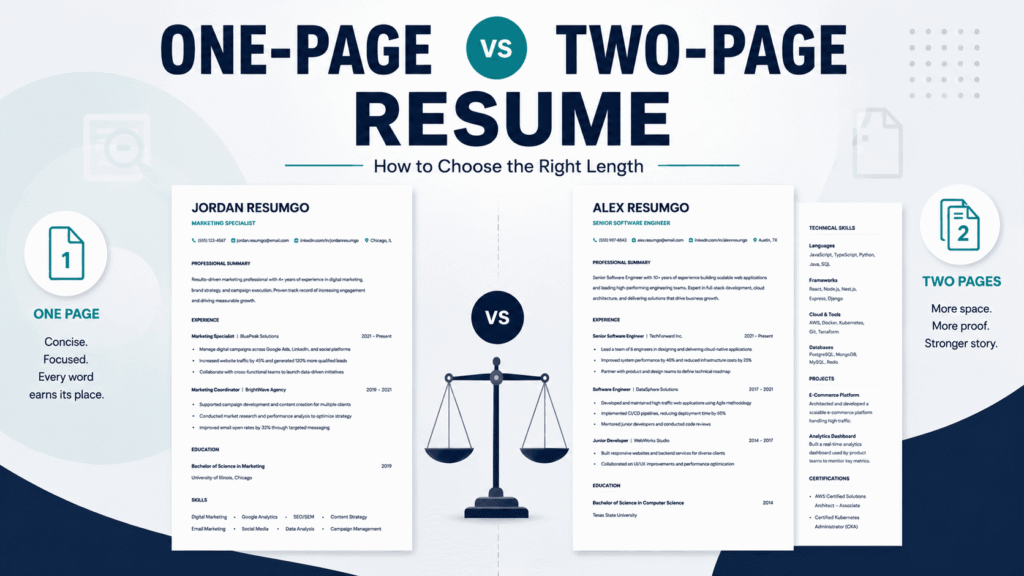
A longer resume is not a mistake when it is used intentionally. In fact, for many professionals, extending beyond one page improves clarity, not confusion. The key is simple: add pages only when they help you communicate more relevant value, not when you repeat old information.
When a two-page resume is the right choice
A two-page resume becomes the standard once your experience starts to expand beyond entry-level roles.
It works best when you:
- Have 5–15 years of relevant experience
- Have multiple roles with measurable achievements
- Need space to include technical skills, tools, or certifications
- Are applying to roles that require keyword depth for ATS systems
At this stage, compressing everything into one page often removes important context and weakens your impact.
This directly answers queries like how many pages should a resume be and how many pages can a resume be, for most professionals, two pages is the natural midpoint.
When a three-page resume becomes acceptable
A resume can extend to three pages when your career demands depth and documentation.
This applies to:
- Senior executives with leadership across multiple teams or departments
- Government roles with strict documentation requirements
- Academic, research, or publication-heavy careers
- Professionals with 15–20+ years of structured experience
In these cases, shortening the resume too aggressively can actually hurt your chances because it hides scope and responsibility.
This also directly applies to how long should a resume be for 20 years experience and how long should a resume be for a government job.
The mistake most candidates make with longer resumes
The problem is not length, it is wasted space.
Most weak long resumes fail because they:
- List duties instead of achievements
- Repeat similar responsibilities across roles
- Include outdated or irrelevant early-career jobs
- Lack clear prioritization of the most important roles
A strong two-page resume never feels “long.” It feels structured.
How to structure a longer resume properly
If your resume goes beyond one page, structure it so the most important information appears first:
- Page 1: strongest roles, most recent achievements, core skills
- Page 2: earlier experience, supporting roles, certifications, education
- Optional Page 3: publications, projects, or detailed leadership history
This ensures recruiters see your value immediately, even if they only scan the first page.
Final rule for deciding resume length
Instead of asking how long should a resume be, shift the question to:
- Does every page add new value?
- Does each section strengthen my case for the role?
- Can a recruiter understand my impact quickly without confusion?
If the answer is yes, then two or even three pages is not only acceptable—it is strategic.
Resume Length by Experience Level
The most practical way to decide resume length is to align it with your career stage. Experience determines how much evidence you need to prove competence. As your responsibilities grow, your resume naturally expands, but only if every detail adds value.
Entry-Level (0–3 years) → 1 page
At this stage, employers expect a focused and concise resume.
Keep it to:
- Education and certifications
- Internships or part-time roles
- Projects and relevant skills
A one-page format works best because it forces clarity and prevents unnecessary filler. This directly answers should a resume be one page for early-career candidates.
3 years experience → 1 page (tight but complete)
With a few years of experience, you still aim for one page, but with stronger emphasis on impact.
Focus on:
- Quantified achievements
- Role-specific contributions
- Skills aligned with job descriptions
This directly applies to how long should a resume be for 3 years experience.
7 years experience → 1–2 pages
At this stage, experience starts to diversify. A single page may no longer capture your progression clearly.
You should:
- Highlight key achievements per role
- Show career growth and promotions
- Remove early irrelevant details
This answers how long should a resume be for 7 years experience.
10 years experience → 2 pages
Mid-career professionals typically require two pages to properly show scope.
Include:
- Leadership or ownership roles
- Measurable business or project impact
- Relevant technical and strategic skills
This aligns with how long should a resume be for 10 years experience.
20 years experience → 2–3 pages
Senior professionals need more space to communicate depth of experience.
A strong resume at this level should:
- Prioritize leadership impact over job duties
- Summarize older roles instead of detailing them
- Focus on outcomes, not chronology
This directly answers how long should a resume be for 20 years experience.
Government jobs → 1–3 pages (depending on requirement)
Government applications often require more structured detail than private-sector resumes.
Expect to include:
- Full employment history (often required)
- Detailed role descriptions
- Compliance with strict formatting rules
This applies to how long should a resume be for a government job.
Internship applications → 1 page
Internship resumes must stay highly focused.
Include:
- Academic background
- Skills and coursework
- Projects or volunteer experience
This answers how long should a resume be for internship.
Master’s applications → 1–2 pages
Academic applications allow slightly more detail than entry-level job resumes.
Focus on:
- Academic achievements
- Research or projects
- Certifications or publications (if any)
This addresses how long should a resume be for masters application.
Front and back resumes → not a recommended standard
Modern hiring systems do not evaluate resumes based on physical layout.
Instead:
- Keep structure digital and ATS-friendly
- Prioritize clarity over formatting tricks
- Avoid relying on “front and back” assumptions
This answers how long should a resume be front and back in modern context.
READ: How to Avoid Application Rejected and Succeed in Your Job Hunt
How Far Should a Resume Go Back?
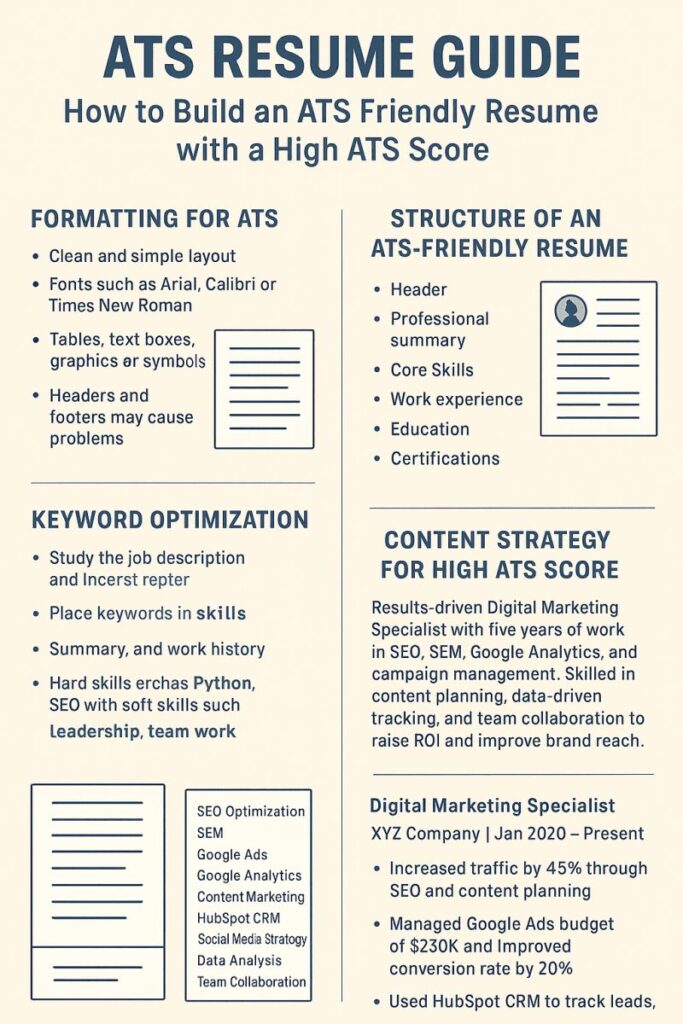
One of the most overlooked factors in resume length is time, not just pages. The further back your resume goes, the longer and weaker it can become if that information is no longer relevant.
Hiring managers care less about your entire history and more about your most relevant 10–15 years of experience.
The standard rule: 10 to 15 years of experience
In most industries, your resume should focus on the last 10–15 years of work history.
This works because:
- It reflects your current skill level
- It aligns with modern tools and technologies
- It shows recent, relevant achievements
Anything older than this often adds noise instead of value.
This directly answers how far back should a resume go and how far should a resume go back.
When you should go further back
You can extend beyond 15 years only if:
- The experience is highly relevant to the role
- It demonstrates rare or leadership-level expertise
- You are applying for senior or government positions that require full history
Even then, older roles should be summarized, not fully detailed.
When to cut older experience completely
You should remove older roles when:
- They are unrelated to your target job
- They repeat responsibilities you already show in recent roles
- They weaken clarity or push your resume beyond 2–3 pages unnecessarily
A resume becomes more powerful when it removes irrelevant history, not when it documents everything.
How far a resume should go in practice
Instead of thinking in strict years, think in relevance:
- Recent roles = detailed achievements
- Mid-career roles = summarized impact
- Early-career roles = optional or removed
This structure keeps your resume tight while preserving credibility.
The real principle recruiters follow
Recruiters do not ask, “How far back does this resume go?”
They ask:
- Does this candidate show recent capability?
- Can this person perform the job today?
- Is the most relevant experience easy to find?
If older experience helps answer those questions, keep it. If it doesn’t, remove or compress it.
That is the most accurate answer to how far should a resume go back in modern hiring.
ALSO SEE: What Is a Curriculum Vitae? 2026 Format, Example, and Resume Differences
How to Optimize Resume Length Without Losing Impact
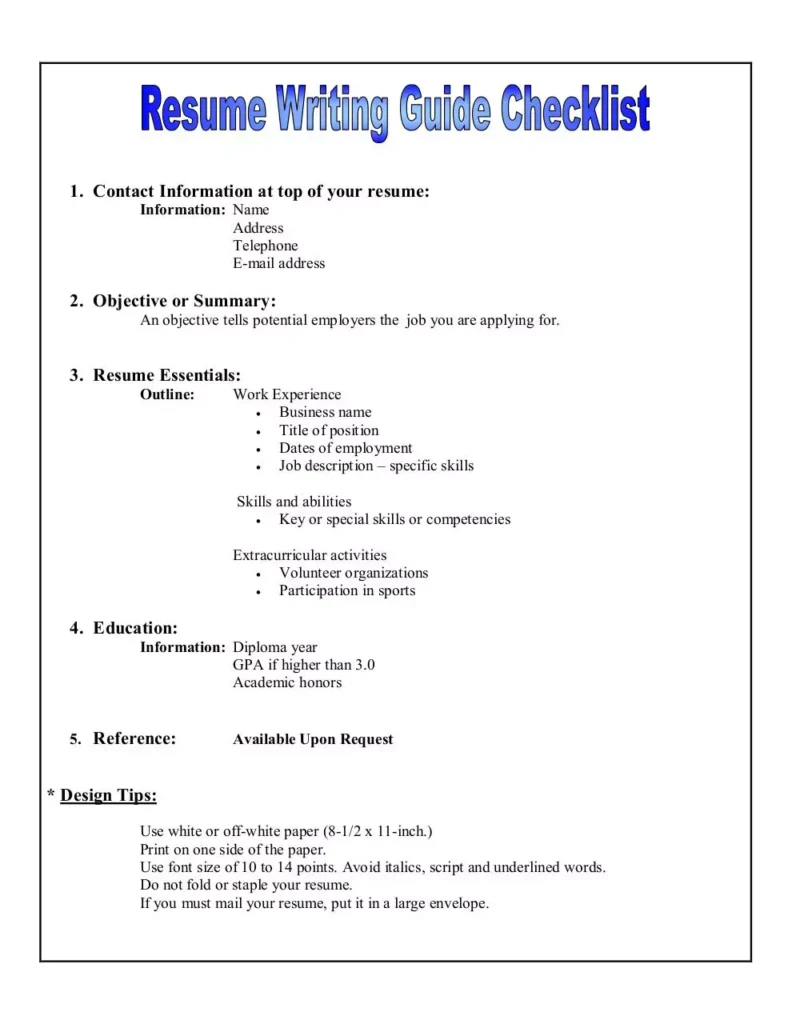
Once you understand the right page count, the real skill is controlling what stays and what gets removed. Most resumes become too long not because candidates lack discipline, but because they fail to prioritize impact over activity.
A strong resume doesn’t just fit a page count; it communicates value faster than competitors.
Start with achievements, not responsibilities
Every role should focus on outcomes, not duties.
Instead of listing what you did, show what changed because of you:
- Increased revenue
- Improved efficiency
- Reduced errors
- Delivered measurable results
This immediately reduces unnecessary word count and strengthens clarity.
Limit each role to 3–6 bullet points
More bullet points do not equal a stronger resume.
For each job:
- Keep only the most relevant achievements
- Remove repetitive or low-impact tasks
- Merge similar responsibilities into one strong statement
This helps you control length while improving readability.
Cut filler words aggressively
Many resumes grow longer because of unnecessary language.
Remove:
- “Responsible for”
- “Worked on”
- “In order to”
- Weak connectors that add no value
This improves clarity and shortens sentences without reducing meaning.
Prioritize recent and relevant experience
Your most recent roles should carry the most detail.
Apply this structure:
- Recent job → most detail
- Mid-level jobs → moderate detail
- Older roles → summary or removal
This naturally answers how many pages should a resume be in a resume by aligning content weight with relevance.
Use keywords strategically, not excessively
Keywords help you pass ATS filters, but overuse makes resumes unreadable.
Instead:
- Mirror job description language naturally
- Place keywords in achievements, not stuffing sections
- Focus on relevance over repetition
This also improves your visibility for queries like how many pages should a resume be and how many pages can a resume be.
Adjust formatting only after editing content
Most people try to “fix length” using margins or font size first.
That is a mistake.
Instead:
- Remove weak content
- Compress overlapping points
- Then adjust spacing if needed
This keeps your resume clean and professional.
Final principle of optimization
A well-optimized resume does not feel shortened; it feels refined.
If you can remove 20–30% of your content without losing meaning, your resume becomes:
- easier to read
- faster to scan
- stronger in impact
- more competitive in ATS systems
This is the real answer behind how long should resume be in practice.
Final Thoughts…
There is no single resume length that works for everyone, but there is a clear standard that consistently performs best across hiring systems and recruiters.
The ideal resume is the shortest version that still clearly proves your ability to perform the role.
The universal rule (what most employers expect)
In most hiring scenarios:
- 1 page works best for early-career professionals
- 2 pages works best for mid-level professionals
- 2–3 pages is acceptable for senior, government, or academic roles
This directly answers the core question: how long should a resume be in modern hiring environments?
Simple experience-based breakdown
- Entry-level or internship → 1 page
- 3–7 years experience → 1–2 pages
- 10+ years experience → 2 pages
- 20 years experience or government roles → 2–3 pages
This structure consistently outperforms rigid “one-page only” advice because it reflects real recruiter expectations.
The decision rule that actually matters
Instead of focusing only on page count, evaluate your resume using this test:
- Can a recruiter understand your value in under 10 seconds?
- Does every section add new, relevant information?
- Are you showing impact instead of listing tasks?
If the answer is yes, your resume length is correct, regardless of whether it is one or two pages.
A resume should never be measured by length alone. It should be measured by clarity, relevance, and impact density.
That is the real answer to:
- how many pages should a resume be
- should resumes be one page
- how many pages can a resume be
- and ultimately, how long should a resume be
When you optimize for value instead of page count, the right length naturally falls into place.
Get Interviews Faster
Optimize your resume and LinkedIn to match what recruiters and ATS systems are actually looking for.
Book your free CV & LinkedIn strategy session today.
FAQ
What is the 7 second rule in resume?
The 7-second rule means recruiters spend about 7 seconds scanning a resume before deciding whether to continue reading. In that time, they look for job title fit, key skills, and measurable achievements. If your resume does not communicate value quickly, it gets skipped.
Can a resume be 1.5 pages?
Yes, a 1.5-page resume is acceptable if your experience does not neatly fit into one page but also does not fully justify two pages. The key is clarity; avoid leaving large empty spaces or forcing unnecessary content just to reach a full second page.
What are common resume mistakes?
Common resume mistakes include listing job duties instead of achievements, using vague language, adding irrelevant experience, overloading with keywords, and making the resume too long or too dense. Poor formatting and lack of measurable results also significantly reduce interview chances.
Is it ok my resume is 3 pages?
Yes, a 3-page resume is acceptable for senior professionals, government roles, or individuals with extensive experience or academic work. However, every section must add value; if the content is repetitive or irrelevant, reducing it will improve your chances of getting noticed.