Book Appointment Now

What is a Blue Collar Job in 2026?

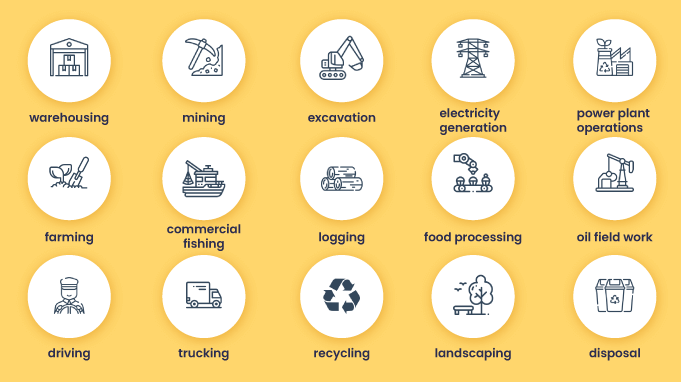
A blue collar job refers to a type of work that primarily involves manual labor or skilled trades. These roles are typically found in industries like construction, manufacturing, maintenance, and mining, where workers engage in hands-on tasks such as operating machinery, repairing equipment, or building structures.
Unlike white-collar jobs, which are office-based, blue collar workers perform physically demanding tasks and often earn hourly wages. Many blue-collar jobs require technical skills, which can be developed through vocational training, apprenticeships, or on-the-job learning.
In this article, we’ll answer the question: What is a blue collar job? We will also explore different blue collar worker examples and explain how these jobs compare to other types of work, such as white-collar, pink-collar, and grey-collar jobs.
Key Characteristics:
- Physical Labor: Jobs require stamina and strength to perform tasks like lifting, building, or repairing.
- Industry Focus: Common in fields like construction, manufacturing, agriculture, and maintenance.
- Compensation: Many blue-collar roles are paid by the hour or through piece-rate systems.
- Training: Roles can range from unskilled labor to highly technical trades, often learned through vocational training or apprenticeships.
- Work Environment: These jobs are typically done on-site, in factories, or in outdoor settings like construction sites or fields.
Blue Collar Worker Examples
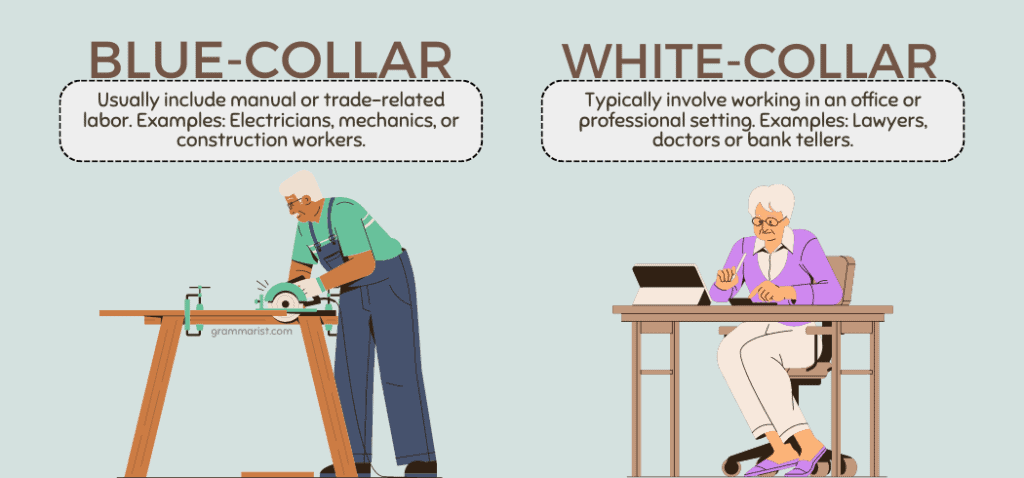
The range of blue-collar jobs is vast, covering everything from unskilled labor to highly specialized trades. Here are a few blue collar worker examples that demonstrate the variety and skill level required in these positions:
- Skilled Trades: Electricians, plumbers, welders, mechanics, HVAC technicians.
- Construction & Manufacturing: Construction workers, carpenters, machine operators, factory workers.
- Transportation & Service: Truck drivers, subway operators, maintenance workers, delivery drivers.
Many of these roles require a strong technical skill set, which can be developed through vocational education, apprenticeships, or on-the-job training.
Some high-paying blue-collar jobs, such as nuclear power plant operators or elevator installers, require not just physical work, but also certifications and specialized training, which can lead to lucrative salaries. For example, a boilermaker may earn upwards of $70,000 per year, while a nuclear technician might command even higher wages.
RELATED: How to Write a Follow Up Email After Interview (With Samples)
Blue Collar vs. White Collar Jobs
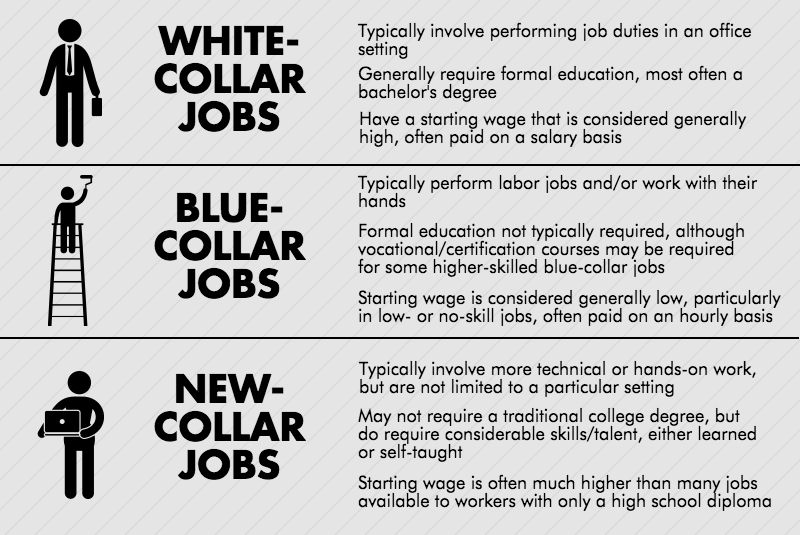
When discussing blue-collar jobs, it’s often helpful to compare them with white-collar jobs, as the two are often seen as opposites in terms of job environment, education, and pay. The main differences lie in the work setting, education requirements, and type of compensation.
Key Differences Between Blue Collar and White Collar Jobs:
- Work Environment:
- Blue Collar: Typically involves manual labor and hands-on tasks, often working in factories, construction sites, or outdoors. The work can be physically demanding and requires physical endurance and technical skill.
- White Collar: These jobs are usually office-based, such as management, administrative roles, or professional services (e.g., law, finance, marketing). White-collar workers generally work in air-conditioned offices and use computers or desk-based tasks.
- Blue Collar: Typically involves manual labor and hands-on tasks, often working in factories, construction sites, or outdoors. The work can be physically demanding and requires physical endurance and technical skill.
- Education and Skills:
- Blue Collar: Many blue-collar jobs do not require a college degree but may need vocational training or apprenticeships. These workers may gain skills through hands-on experience or attend trade schools.
- White Collar: White-collar roles generally require a college degree (or higher), and the skills involved tend to be more academic or managerial in nature. Professional certifications are often required for higher-paying white-collar jobs.
- Blue Collar: Many blue-collar jobs do not require a college degree but may need vocational training or apprenticeships. These workers may gain skills through hands-on experience or attend trade schools.
- Pay and Compensation:
- Blue Collar: Compensation is often hourly, and blue-collar workers may also receive overtime pay for extra hours worked. While these jobs can pay well, many blue-collar workers are still paid per hourly wage or piece-work rate.
- White Collar: White-collar jobs are often salaried, and compensation tends to be steady with fewer hourly fluctuations. While they may not always be manual, these jobs typically offer more predictable pay and benefits, including health insurance, paid time off, and retirement plans.
- Blue Collar: Compensation is often hourly, and blue-collar workers may also receive overtime pay for extra hours worked. While these jobs can pay well, many blue-collar workers are still paid per hourly wage or piece-work rate.
What Are White Collar Jobs?
While blue-collar jobs are centered around physical labor and technical skills, white-collar jobs typically involve office-based work that requires mental or administrative skills. White-collar workers are often employed in industries like finance, technology, consulting, education, and medicine.
Key Examples of White Collar Jobs:
- Management: CEOs, CFOs, project managers.
- Professional Services: Doctors, lawyers, accountants.
- Technology: Software engineers, data scientists, web developers.
In contrast to blue-collar workers, white-collar workers typically spend their days sitting at desks, often working with computers or engaging in client meetings. These jobs require higher education and often involve problem-solving, analysis, or creative work.
READ MORE: Best Interview Questions Recruiters Ask in 2026
Other Collar Jobs
In addition to the commonly discussed blue-collar and white-collar jobs, there are other categories of jobs that don’t fit neatly into either of these two traditional classifications. These include pink collar jobs, grey collar jobs, and red collar jobs, each with distinct characteristics and roles in the workforce.
Pink Collar Jobs
Pink collar jobs refer to positions typically in the service or caregiving sectors, often involving work that is more emotionally driven than physically demanding. Historically, these jobs were dominated by women, though this has changed over time.
Examples of Pink Collar Jobs:
- Nurses
- Teachers
- Childcare workers
- Social workers
- Retail workers (although retail can also be considered blue-collar depending on the role)
These jobs often require emotional intelligence, people skills, and can involve long hours of interaction with clients or patients. While many pink collar jobs don’t require a four-year college degree, certifications or vocational training are often necessary to qualify for these roles.
Grey Collar Jobs
Grey collar jobs are a blend of blue-collar and white-collar work, often involving both manual labor and technical expertise. These roles typically require a higher level of technical skill and education compared to traditional blue-collar jobs but do not fall under the more academic or managerial white-collar jobs.
Examples of Grey Collar Jobs:
- Technicians (e.g., computer technicians, automotive service technicians)
- Paralegals
- Plumbers with specialized certifications
- Electricians with advanced expertise in smart home systems or renewable energy technologies
These workers are often skilled in both hands-on work and problem-solving, requiring a unique combination of technical knowledge and physical labor.
Red Collar Jobs
Red collar jobs generally refer to civil service workers and public safety professionals, often involved in government or emergency response roles. These workers are typically employed by local, state, or federal governments and often have unionized positions.
Examples of Red Collar Jobs:
- Firefighters
- Police officers
- Emergency medical technicians (EMTs)
- Military personnel
Red collar workers are essential in public safety, law enforcement, and emergency response, often requiring rigorous physical fitness and training to handle stressful and high-risk situations.
SEE ALSO: 2026 Questions to Get to Know Someone in Job Interviews
Is Retail a Blue Collar Job?
The question of whether retail jobs are considered blue-collar work depends on the specific role and the nature of the work involved. Retail jobs that involve physical labor (like stocking shelves, managing inventory, or working in warehouses) may fall under the blue-collar category, especially if they involve manual tasks.
However, retail jobs that require customer interaction and less physical labor might be considered closer to pink collar jobs, particularly in sales or service positions. While retail workers are often paid hourly like blue-collar workers, the level of skill and responsibility required can vary significantly between different retail roles.
Examples:
- Blue Collar Retail Jobs: Stockers, warehouse employees, delivery drivers.
- Pink Collar Retail Jobs: Sales associates, cashiers, customer service representatives.
In short, retail jobs can straddle the line between blue-collar and pink-collar, depending on the specific tasks involved.
Skills and Training Required for Blue Collar Jobs
Blue-collar jobs require a variety of skills and training, ranging from unskilled labor to highly technical expertise. Many of these jobs are learned on the job or through specialized training programs like apprenticeships or vocational schools.
Skills for Blue Collar Jobs
The specific skills needed depend largely on the job, but in general, blue-collar workers need to be hands-on and able to work with tools, machinery, or construction materials. Here are some common skills required:
- Technical Skills: Operating machinery, understanding electrical systems, welding, or plumbing.
- Physical Stamina and Strength: Many blue-collar roles require lifting, carrying, and standing for long periods.
- Problem-Solving Skills: Troubleshooting machinery, diagnosing issues, or figuring out how to complete tasks efficiently.
- Attention to Detail: Ensuring that work is done properly, especially in industries like construction and manufacturing.
- Time Management: Being able to work efficiently and meet deadlines, especially when working in teams.
Types of Training for Blue Collar Jobs
Training for blue-collar jobs varies greatly depending on the role. Some positions require minimal training, while others may need certification or formal education.
- Unskilled Labor:
Jobs like cleaning, maintenance, or warehousing often require little to no formal education, and training is usually on-the-job. These workers may only need basic physical labor skills.
- Skilled Trades:
Many high-paying blue-collar jobs, like plumbers, electricians, and welders, require formal vocational training or an apprenticeship. These programs can last from a few months to several years and may include classroom instruction as well as hands-on training.
- Advanced Technical Training:
Jobs such as elevator installers, aviation maintenance technicians, or nuclear power plant operators often require specialized technical training through accredited programs or apprenticeships. Some even require a state certification or license to work in certain states or industries.
- Apprenticeships:
Apprenticeships combine on-the-job training with classroom instruction, allowing workers to earn a wage while they learn. Many skilled trade jobs, such as electricians or carpenters, use this model, which can take anywhere from 2–5 years.
READ: Exciting Marketing Jobs: Top Roles You Can’t Miss in 2026
Benefits and Challenges of Blue Collar Jobs
While blue-collar jobs can provide many benefits, they also come with their own set of challenges.
Benefits of Blue Collar Jobs:
- Job Security:
Many blue-collar jobs, especially in construction or manufacturing, are in high demand due to ongoing infrastructure needs and industrial growth.
- Earning Potential:
Despite often being hourly, many blue-collar jobs, such as electricians, plumbers, or HVAC technicians, can offer lucrative wages. With overtime, workers in these positions can earn well above the national average.
- Hands-On Work:
People who enjoy working with their hands and seeing the tangible results of their labor often thrive in blue-collar jobs.
- Low Entry Barriers:
Blue-collar jobs generally don’t require a college degree. This can make them more accessible to people who want to start working right away and learn skills on the job.
Challenges of Blue Collar Jobs:
- Physical Demands:
Many blue-collar roles are physically demanding, requiring stamina, strength, and the ability to work in harsh environments (e.g., construction sites, factories, or mines).
- Job Instability:
Some blue-collar industries, especially those linked to manufacturing or construction, can be impacted by economic downturns, resulting in layoffs or project delays.
- Workplace Hazards:
Due to the nature of the work, blue-collar jobs often carry more physical risks and safety concerns than office-based work.
- Long Hours:
Many blue-collar jobs require workers to work overtime or weekends, especially in industries like construction, transportation, or manufacturing.
Conclusion
Blue-collar jobs are growing, particularly as technology continues to shape various industries. Automation and robotics are making certain manual tasks easier, but skilled blue-collar workers are still in high demand for their technical expertise. As the need for infrastructure and manual labor remains strong, blue-collar jobs continue to offer job security, high earning potential, and opportunities for growth.
While the traditional notion of blue-collar work as unskilled labor has evolved, many workers today possess highly specialized skills that are indispensable to industries like construction, manufacturing, and energy. With the right training, these jobs can lead to long-term, fulfilling careers in a wide range of fields.
Ready to advance your blue-collar career and maximize earning potential?
NexTechJobs provides a structured pathway that helps you gain the skills and certifications needed to thrive in high-demand blue-collar industries.
Instead of waiting for opportunities to come to you, NexTechJobs helps you:
• Access high-quality vocational training in various skilled trades
• Gain certifications that boost your employability and pay
• Connect with top employers actively looking for skilled blue-collar workers
• Receive ongoing support and career guidance to reach higher-paying roles
Don’t miss out on the rewarding and lucrative blue-collar jobs available today.
If you’re ready to take the first step toward building a successful blue-collar career, visit NexTechJobs now and start your journey toward securing a high-paying, stable job in a field you’re passionate about.
FAQ
What Are Red Collar Jobs?
Red collar jobs refer to positions in public service, particularly in safety and emergency response sectors. These workers are often employed by government agencies and are responsible for maintaining public safety. They are commonly involved in high-risk, physically demanding jobs.
Examples of Red Collar Jobs:
– Firefighters
– Police officers
– Emergency medical technicians (EMTs)
– Military personnel
These jobs typically involve working in dangerous, high-pressure environments, often requiring a combination of physical fitness and technical training.
What Are Gold Collar Jobs?
Gold collar jobs refer to high-paying professional roles that require extensive education, advanced certifications, and often specialized skills. These jobs often blend characteristics of both white-collar and blue-collar work but come with a high salary and prestige.
Examples of Gold Collar Jobs:
– Doctors
– Lawyers
– Engineers
– Tech industry leaders
Gold collar workers are typically highly educated and involved in fields like medicine, law, and advanced technology where both knowledge and professional certification are required.
What is a Pink Collar Job?
Pink collar jobs are typically in service-oriented and caregiving roles, which have traditionally been associated with women. These jobs involve direct interaction with people, often in sectors like healthcare, education, or customer service.
Examples of Pink Collar Jobs:
– Nurses
– Teachers
– Childcare workers
– Social workers
These roles often require emotional intelligence, people skills, and compassion, and while they can be physically demanding, they are primarily focused on care and support.
What Collar Job is Beauty?
Beauty-related careers are generally categorized as pink collar jobs, as they often involve personal service and customer interaction. These roles may require technical skills and training but typically do not require a college degree.
Examples of Beauty Jobs:
– Hair stylists
– Makeup artists
– Estheticians (skin care professionals)
These roles are deeply rooted in service and creativity, with a focus on helping clients enhance their appearance and well-being.