Book Appointment Now

Land Remote Tech Jobs in 2026, No Experience Needed
Tobi refreshed his email for the third time that morning, stomach tightens. Six months of rejections sat in his inbox. “Not enough experience,” every single time. He didn’t have a computer science degree. He didn’t have a fancy portfolio. What he had was a phone, a library WiFi connection, and one stubborn belief: someone, somewhere, would hire him remotely.
Four months later, Tobi answered his first support ticket for a US based software company, from his bedroom in Lagos.
His story isn’t rare anymore. Remote tech jobs have quietly become one of the most realistic paths into a stable, well paying career, even for people who start with nothing but curiosity. You don’t need a degree from a top school or years of coding experience to build real remote technology careers. You need a clear map. This guide gives you exactly that.
What Counts as a Remote Tech Job in 2026?
Forget the old assumption that tech means coding. Remote tech jobs now span two clear tracks, and both fall under the wider umbrella of remote IT jobs. The technical track covers software development, cybersecurity, and data roles that often need specific training. The non technical track covers support, quality assurance, and data entry, roles that value sharp communication and a willingness to learn over years of experience.
This second track matters most if you’re starting out. Entry-level remote tech jobs live here, and so do most remote tech jobs with no experience. You don’t skip the ladder. You just find the right rung to grab first.
The Best Entry Points Into Remote Tech

You don’t need to write a single line of code to start a legitimate tech career. Look at where the doors actually open.
| Role | Experience Needed | Core Skill | Where It Leads |
| Tech Support | None | Clear communication, patience | Technical Support Engineer |
| QA Tester | None to minimal | Attention to detail | Remote software developer jobs |
| Data Entry | None | Accuracy, consistency | Remote data analyst jobs |
| Junior Security Analyst | Some certification | Curiosity, basic risk awareness | Remote cybersecurity jobs |
Each row on this table is a door, not a dead end. A QA tester who studies the codebase she tests often becomes the developer who writes it. A data entry specialist who learns to spot patterns becomes the analyst who explains them. Pick the role that matches what you have today, then treat it as your training ground for what you want tomorrow.
What These Jobs Actually Pay
Money talks, so let’s talk numbers. Entry-level remote tech support and data entry roles typically pay between $500 and $1,200 monthly for workers based in Africa, often more when you work for US or UK companies directly. QA testers and junior analysts can push past $1,500 monthly within a year of solid experience.
The real jump comes when you move into specialized tracks. High-paying remote tech jobs, think mid-level developers, cybersecurity analysts, and senior data analysts, regularly clear $3,000 to $6,000 monthly, with some seasoned professionals earning far more. If six figures sound out of reach, they aren’t; check out our guide on highest-paying jobs without a degree to see how far skill alone can take you. Your location doesn’t cap your ceiling anymore. Your skill does. That’s the entire promise of remote work: the market pays for what you can do, not where you sit while you do it.
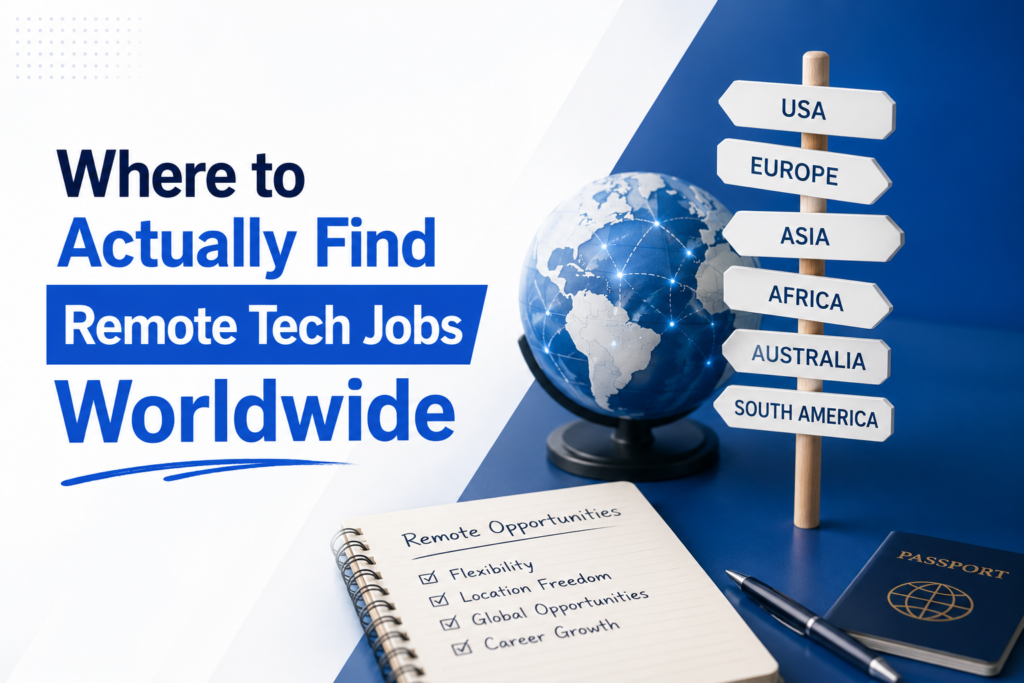
Where to Actually Find Remote Tech Jobs Worldwide
Scrolling LinkedIn all day won’t cut it. You need platforms built specifically for remote hiring.
Start with global boards like We Work Remotely and Remote.co. They list remote tech jobs worldwide and let you filter by experience level and role type. Next, explore tech specific platforms like Turing and Toptal, which connect skilled workers directly with international companies hunting for talent. Whether you want remote tech jobs in software, security, or data, these platforms exist to match you with the right one.
If you’re based in Africa, platforms like Andela and Gebeya actively source and vet African tech talent for global companies, cutting out a layer of competition you’d otherwise face on generic job boards. These platforms understand the work-from-home tech jobs market from both sides: what companies need and what talent like yours brings to the table.
Apply daily. Treat your job search like a job itself, because right now, it is one.
Proof of Work: What Actually Gets You Hired
Without a work history, you need something else to point to. Build it yourself, starting with the document every employer sees first. If you’re not sure which format fits your background, our breakdown of the 7 types of resumes walks through how to choose the right one, and our guide on how long your resume should actually be will help you keep it tight and readable.
If you’re eyeing development roles, build small projects and host them publicly on GitHub. If data or operations interest you, create a dashboard from a public dataset and explain what it shows. Free certifications add real weight too. The Google IT Support Professional Certificate and Google Data Analytics Certificate both signal to employers that you took initiative before anyone paid you to.
Watch for scams as you search. If a “recruiter” asks you to pay for training, equipment, or a “processing fee” before you start, walk away. Legitimate remote tech jobs never charge you to work. Verify companies through their official websites, check reviews on Glassdoor, and never share banking details before signing a real contract.
Your Next Move After Landing the Job
Your first remote tech job is a starting point, not a final destination. Data entry specialists who study spreadsheets deeply move into data analyst roles within a year or two. Support agents who dig into the “why” behind tickets often move into technical support engineering, then into cybersecurity. QA testers who read code alongside their testing frequently graduate into remote software developer jobs.
If you’re currently employed and eyeing this move, plan your exit the right way. Our guide on good reasons for leaving a job (with sample answers) can help you frame the transition professionally when the moment comes.
Nobody hands you this progression. You build it by staying curious in the role you already have.
Start Your Remote Tech Career With NexTechJobs
Tobi didn’t do this alone, and you don’t have to either. NexTechJobs coaches job seekers through every step in this guide: picking the right entry point, building proof of work, and applying with confidence. Ready to land your first remote tech job? Reach out to NexTechJobs today and let’s build your path together. DM us on LinkedIn for daily job leads and coaching tips.
What questions should you ask for a remote job?
Ask about communication expectations first: which tools the team uses, how often they check in, and whether they expect real time overlap or async updates. Ask how they measure performance for remote staff, since this tells you if they judge output or hours logged. Also ask about equipment support, payment currency and schedule, and whether the role stays remote long term or expects eventual relocation.
What must you avoid during remote work?
Avoid working from unsecured public WiFi when you handle sensitive company data; use a VPN instead. Avoid going silent for long stretches, since remote managers read silence as a warning sign, not focus. Avoid skipping structure entirely; without a home office routine, burnout and missed deadlines creep in fast. And avoid multiple full time remote jobs at once without disclosure, since most contracts explicitly forbid this.
Is it actually possible to get remote tech work now?
Yes, and the market backs this up. Companies across the US, UK, and Europe now hire remote support agents, QA testers, and data specialists directly from Africa and other regions, often at competitive rates. The barrier isn’t location anymore. It’s proof that you can do the job, which is exactly why building a portfolio and picking up free certifications matters more than a degree.
How do you make $25 an hour online?
Focus on skilled remote roles rather than generic gig work. Mid-level QA testers, technical support specialists, and junior data analysts routinely hit this rate on platforms like Turing, Toptal, and direct hires through We Work Remotely. Freelance writers, developers, and cybersecurity trainees with a solid portfolio also clear $25 an hour once they move past entry level pricing.
How long does it take to land your first remote tech job?
Most people land their first role within three to six months of focused effort, not overnight. The timeline shortens if you apply daily, build proof of work early, and target entry level roles instead of competing for senior positions. Tobi’s own journey took four months, and that’s a realistic benchmark to aim for.