Book Appointment Now

How to Write an Employment Verification Letter: A Comprehensive Guide
An employment verification letter is an official document used to confirm an employee’s job status. Whether for securing a loan, renting a home, or applying for a new job, this letter provides vital proof of employment. Writing a clear, professional employment verification letter is essential to help employees access the services they need while also maintaining your company’s reputation and confidentiality.
What is an Employment Verification Letter?
An employment verification letter is a formal document written by an employer that confirms an employee’s job status. This letter typically includes key details such as the employee’s full name, job title, employment dates, and salary, depending on the specific request.
It serves as proof of employment, often required by third parties such as financial institutions, landlords, or future employers. The letter may also confirm part-time or full-time status, depending on the employee’s current situation.
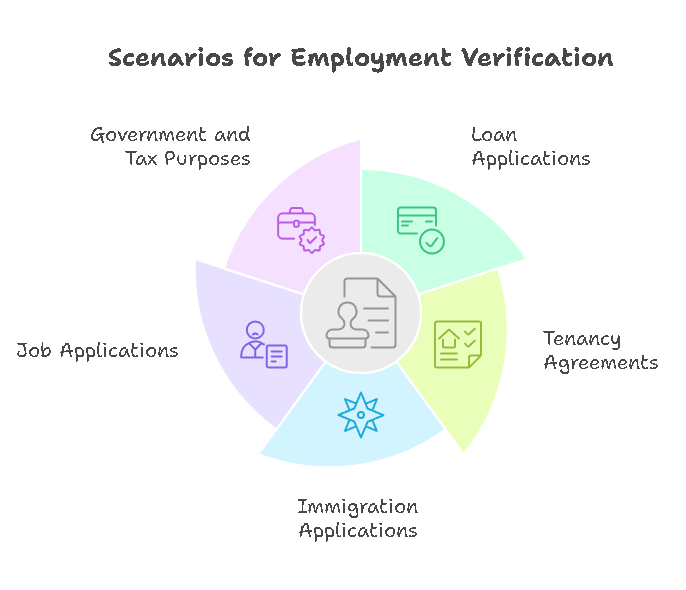
This document is vital in situations such as applying for loans, renting property, or even confirming an individual’s work history for immigration or visa purposes. By providing accurate and clear employment details, the letter helps employees demonstrate their reliability and financial stability, facilitating a smoother process for securing housing, loans, or job opportunities.
RELATED: 2 Weeks Notice Letter: Templates, Examples, and How to Write It Right
Key Information to Include in an Employment Verification Letter
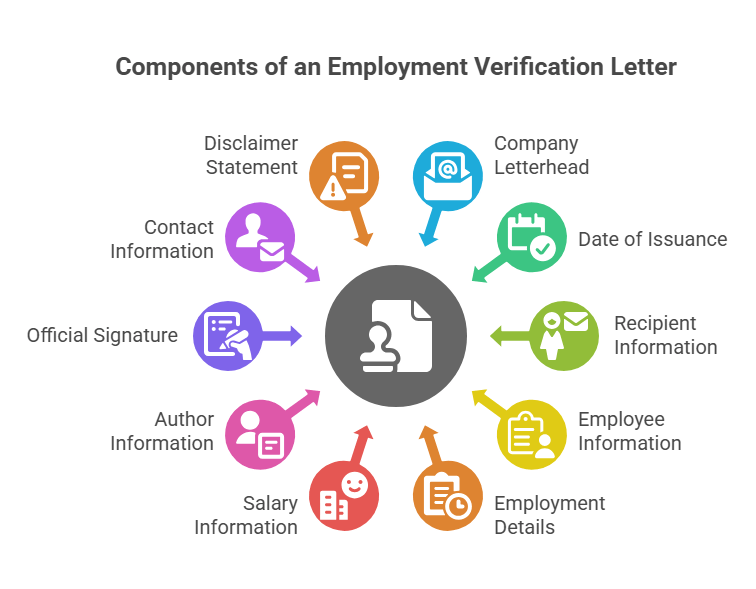
When writing an employment verification letter, it’s crucial to include certain details to ensure that the document serves its purpose effectively. Here are the essential components to include:
- Company Information: The company’s name, address, and contact details should appear at the top of the letter, often in the letterhead.
- Employee Information: Include the employee’s full name, job title, employment dates (start and end if applicable), and job description. This confirms the individual’s position within the organization.
- Employment Status: State whether the employee is currently employed full-time or part-time, and specify if the person is a current or former employee.
- Salary Information: If required and authorized, include details on the employee’s salary, bonus structure, or compensation package.
- Additional Information: Depending on the request, other details such as the reason for employment termination (if applicable) may need to be added, along with the employee’s performance or job duties.
Including these key pieces of information ensures that the letter fulfills its purpose of confirming the employee’s status while adhering to privacy and compliance guidelines.
How to Write an Employment Verification Letter
Writing an employment verification letter requires a clear and concise approach to ensure it serves its purpose effectively. Follow these steps to craft a professional letter:
- Gather the Necessary Information: Before writing, collect all the relevant details from the employee, such as their job title, employment dates, and salary information (if applicable). Ensure you have the correct recipient information if the letter is being sent directly to a third party.
- Use Official Company Letterhead: Begin the letter with the company’s official letterhead, which includes the company name, logo, and address. This adds legitimacy to the letter and confirms its authenticity.
- Include the Employee’s Information: Provide the employee’s full name, job title, and employment dates. If applicable, include their salary and job duties. Make sure to specify whether they are a current or former employee.
- Be Professional and Clear: Use a formal tone and ensure the language is professional. Be direct and avoid unnecessary details that might confuse the purpose of the letter. Clearly state the employee’s position and confirm their employment status.
- Finalize with a Closing: End the letter with a formal closing, offering further assistance if needed. Provide the contact information for someone who can verify the details if the recipient has further questions.
By following these steps, you can ensure that your employment verification letter is both professional and comprehensive, serving the needs of both the employee and the requesting party.
Free Templates and Samples
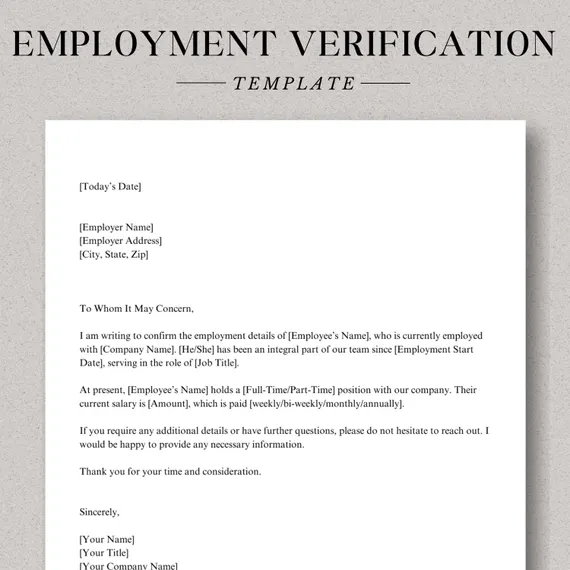
To make the process easier, using a standardized template for an employment verification letter ensures consistency and professionalism. Here’s a basic employment verification letter template you can customize for your needs:
[Company Name]
[Company Address]
[City, State, Zip Code]
[Email Address]
[Phone Number]
[Date]
To Whom It May Concern,
This letter serves as confirmation that [Employee’s Name] is employed with [Company Name]. [Employee’s Name] has been employed with us since [Start Date] and currently holds the position of [Job Title]. [Employee’s Name] is a [Full-Time/Part-Time] employee, and their current salary is [Salary Amount] per [Month/Year].
Should you require further details, please feel free to contact me at [Phone Number] or [Email Address].
Sincerely,
[Your Name]
[Your Job Title]
[Company Name]
READ MORE: How to Quit a Job Professionally: The 2026 Guide
Why Use a Template?
Using a template like the one above saves time and ensures all necessary details are included. It also reduces errors and helps maintain consistency across your organization’s employment verification letters. You can easily adapt the template for different employee requests and different legal or financial circumstances.
How to Request an Employment Verification Letter from HR
Requesting an employment verification letter is a simple but important process. To ensure that your request is handled promptly and accurately, follow these steps:
- Contact HR Early: Give HR enough time to process your request. It’s best to make your request at least 3-5 business days before the letter is needed, especially if you require additional details like salary information.
- Provide Clear Details: When submitting your request, be sure to include all the necessary details. This includes the recipient’s name, address, and any specific information they require (e.g., salary, job title, dates of employment).
- Specify the Purpose: Let HR know why you need the letter (e.g., for a mortgage, job application, visa processing). This helps HR understand the importance of the request and tailor the letter accordingly.
- Use the Correct Format: Some companies may have a specific form or process for requesting employment verification. If so, make sure to follow it to avoid delays.
- Follow Up: If you haven’t received the letter after a few days, don’t hesitate to follow up politely. A quick reminder can help ensure timely delivery.
By following these steps, you can streamline the process and receive your employment verification letter without unnecessary delays.
SEE ALSO: Exciting Marketing Jobs: Top Roles You Can’t Miss in 2026
Staff Verification Letters for Past Employees
Writing an employment verification letter for a past employee is slightly different from writing one for a current employee. The key difference lies in the specifics you may need to include, depending on the request.
When verifying employment for past employees, make sure to include the following:
- Employee’s Full Name: Confirm the employee’s full legal name, as they were known during their employment.
- Job Title and Employment Dates: Include the job title(s) held by the employee and the start and end dates of their employment with your company.
- Reason for Termination (if applicable): If requested, mention whether the employee left voluntarily, was laid off, or if the employment was terminated for any other reason. Ensure you have the necessary consent to disclose this information.
- Salary Information (if relevant): Only include salary details if the employee has authorized the release of this information. Some requests may require salary history, while others may not.
- Company Contact Information: Make sure the company’s contact details are included in case further verification is needed.
It’s important to follow your company’s policies and obtain the necessary permissions from the former employee before sharing sensitive information. Staff verification letters for past employees are often used for mortgage applications, job background checks, and other formal verification needs.
Conclusion
An employment verification letter is a crucial document that provides proof of an employee’s status, whether for securing loans, renting property, or verifying employment for a new job. By following the proper steps and including the necessary details, employers can ensure the process is smooth and professional.
Using clear templates and following company policies also helps maintain accuracy and confidentiality, making the letter a valuable resource for both employees and employers.
Ready to Secure Your Dream Job with Confidence?
Most people rush through job applications, sending out resumes without tailoring them for the right roles.
They apply first… then wonder why they don’t hear back.
That’s where things go wrong.
The smarter way is simple:
Prepare your profile for the job you actually want before you start applying.
That’s exactly what NextTechJobs helps you do.
We don’t just offer advice.
We do the hard work for you.
We tailor your resume to match high-paying job descriptions
We position your LinkedIn to attract recruiters’ attention
We help you prepare for interviews with confidence
We guide you through every step to ensure you land the role you deserve
All while you stay on track with your career goals.
Book Your Free Career Strategy Call with NextTechJobs
If you’re ready to make your next career move, or even just exploring your options, this is the step you need to take first.
We’ll assess your current situation and show you exactly how to land your dream job without wasting time or effort.
FAQ
What is another name for the employment verification letter?
An employment verification letter is also commonly known as a proof of employment letter, letter of employment, or employee verification letter. These terms are often used interchangeably to describe a document that confirms an individual’s employment status, job title, and related details.
How to write a letter to verify employment?
To write a letter verifying employment, follow these steps:
Header: Include the company’s letterhead with the business name, address, and contact details.
Employee Details: Clearly state the employee’s full name, job title, and dates of employment.
Employment Confirmation: Confirm the employee’s current status (full-time, part-time, or former employee).
Additional Information: If requested, include salary details or reason for employment termination.
Closing: Sign off with your name, title, and contact information for further inquiries.
Keep the tone professional and concise, and ensure the information is accurate to avoid any misunderstandings.
What is the difference between an employment confirmation letter and an employment verification letter?
The employment verification letter and employment confirmation letter serve similar purposes but differ in context and detail:
Employment Verification Letter: Typically requested by third parties (like lenders, landlords, or future employers) to confirm an employee’s job status, including salary and job title.
Employment Confirmation Letter: Generally issued internally to confirm an employee’s status, often for internal record-keeping or when the employee needs to provide confirmation for other purposes, such as internal audits or HR documentation.
How to request an employment verification letter from HR by email PDF?
To request an employment verification letter from HR via email, follow these steps:
Subject Line: Use a clear subject like “Request for Employment Verification Letter”.
Greeting: Address the HR representative politely by name.
Purpose: Briefly explain why you need the letter (e.g., for a mortgage, new job application, etc.).
Details: Include all the required details, such as your full name, job title, employment dates, and any other specifics needed.
Attach: Request the letter in PDF format for easy delivery.
Closing: Thank HR for their assistance and provide contact information for any follow-up.
Example email:
Subject: Request for Employment Verification Letter
Dear [HR Manager’s Name],
I hope this message finds you well. I am writing to request an employment verification letter for my [loan application, job application, etc.]. The letter should include my job title, dates of employment, and current employment status. Please provide the document in PDF format.
Thank you for your help, and please let me know if you require any additional information.
Sincerely,
[Your Name]
[Your Contact Information]